


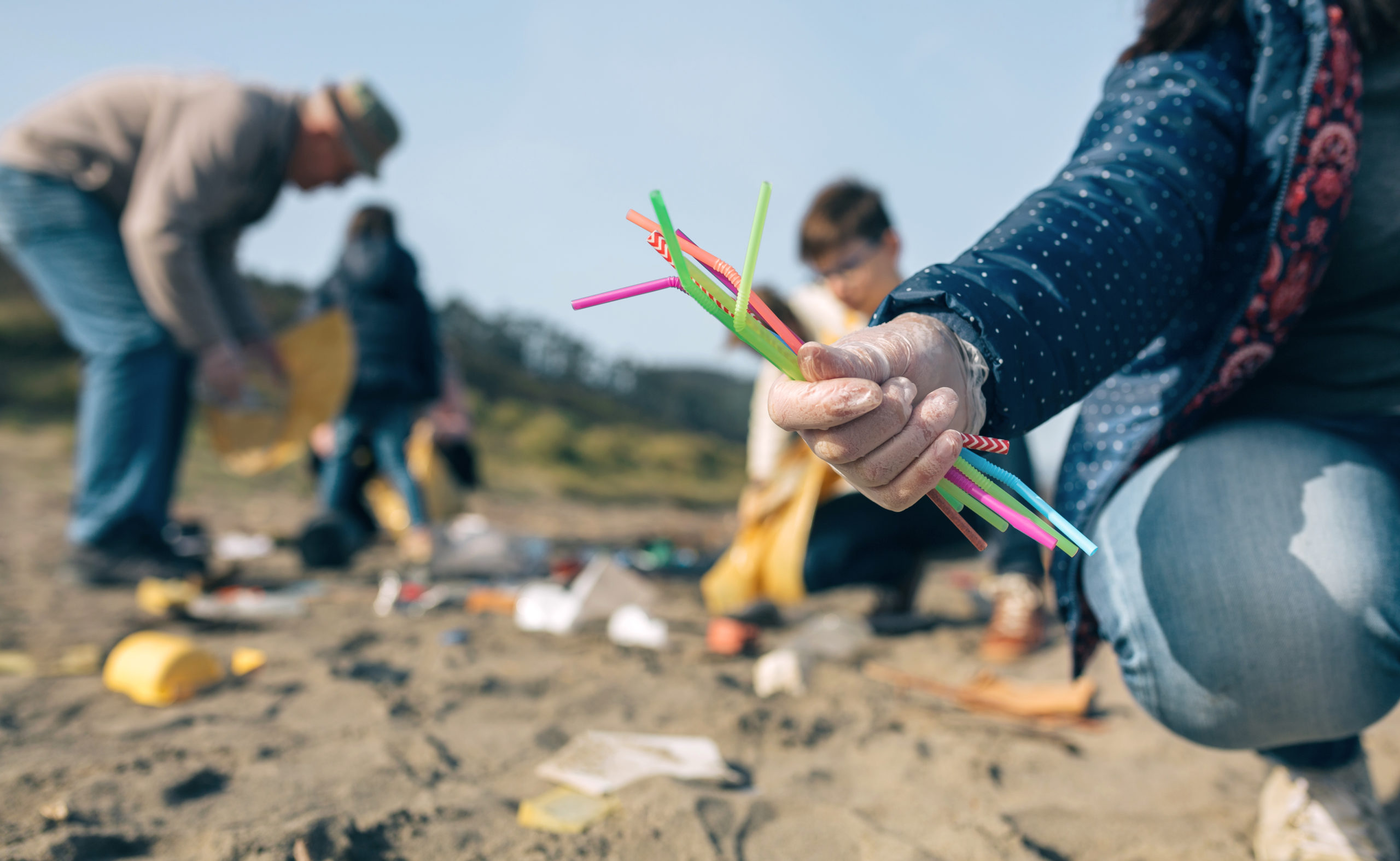
#PlasticFree: Ban on Straws—They Take 500 Years to Decompose

Even the fast-food giant has begun to embrace sustainability. Starting next September, in the United Kingdom and Ireland McDonald’s will begin distributing paper straws in its restaurants instead of plastic ones. For now, the company has no plans to do the same in other countries, but it has announced that it has begun testing the initiative in France, Norway, and the United States. This is a bold move, considering that in the United Kingdom alone, the fast-food chain uses about 1.8 million of them every day.
The fight against single-use plastic continues overseas as well. The hotel chain Hiltonhas decided to stop using plastic straws in its hotels across Europe, Asia, and Africa. No more drinks or cocktails served with plastic straws, then—instead, alternative solutions made of paper or easily biodegradable materials. Hilton’s commitment involves eliminating over 5 million plastic straws and 20 million plastic bottles from 650 hotels. If laid end to end, the straws would stretch roughly the distance between Milan and Naples.
From the mainland, we move on to the famous “floating cities.” In 2019, the 50 ships in the fleet Royal Caribbean Cruises Ltd will no longer use plastic straws. This decision applies to all of the company’s brands—Royal Caribbean International, Celebrity Cruises, Azamara Cruises, TUI Cruises, and Pullmantur Cruceros—and is part of a comprehensive program aimed at substantially reducing plastic use on board.

The island of Lampedusa has also decided to ban the use of plastic straws. To join the campaign, launched by Marevivo, are the Municipality of Lampedusa, the Pelagie Islands Marine Protected Area, Federalberghi Pelagie, the Lampedusa Entrepreneurs’ Association, and the Pelagie Islands Beach Tourism Consortium. “We are very pleased that Lampedusa is one of the first islands to support us,” explained Fabio Galluzzo, vice president of Marevivo. “Together with the Marevivo Sicily Delegation and the participating organizations, we were able to secure the first commitments. “We are focusing above all on involving the smaller islands—small communities where it is easier to raise public awareness and where waste management is particularly complex. The campaign began on the Aeolian Islands.”
The straw—an ancient tool first used by the Sumerians to drink the thick, cloudy beer of that era, and patented in 1888 by Marvin Stone—has its days numbered. So do various single-use plastic items. The European Commission has approved new regulations to combat the spread of the 10 single-use plastic products “that most pollute Europe’s beaches and seas.” Ear swabs, cutlery, plates, straws, drink stirrers, and balloon sticks must be manufactured exclusively from sustainable materials.“In light of the constant increase in plastic waste in the oceans and seas and the resulting damage —the EU executive stated—the European Commission is proposing new rules for the 10 single-use plastic products that most pollute Europe’s beaches and seas, as well as for lost and abandoned fishing gear. These products account for 70% of marine litter.”
Here at VMEngine, thanks to our CEO Fabio Cecaro, we’re proud to be pioneers of the #plasticfree movement. We said goodbye to plastic bottles a long time ago, replacing them with convenient, washable, and reusable water bottles. After all, water tastes the same when you drink it from an aluminum flask.